Publish time:
2020-01-13
 Clicks: 25
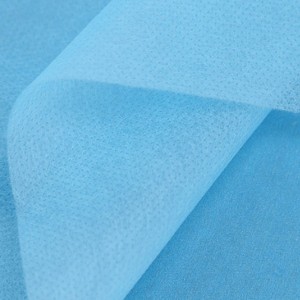
Non-woven fabric is a material that we often come across in our daily lives and is widely used. With the development of modern science and technology, the types of non-woven fabric we use have increased significantly, and the performance of non-woven fabric has also changed and improved. Hot air non-woven fabric is a term that we have often heard in recent years, but perhaps you haven't had the opportunity to understand hot air non-woven fabric in detail. Now, let me introduce some of the heat plasticity of hot air non-woven fabric to you.
Fibrous nets composed of heat plastic synthetic fibers can all be reinforced by heat bonding, such as polyester, nylon, polypropylene, etc. Since cotton, wool, hemp, viscose, etc. do not have heat plasticity, the fibrous nets composed of these fibers alone cannot be reinforced by heat bonding.
However, a small amount of cotton, wool, etc. fibers can be added to the heat plastic fibrous nets to improve certain properties of the non-woven fabric, but generally, it should not exceed 50%. For example, hot-pressed non-woven fabric made of a 30/70 blend of cotton and polyester can significantly improve moisture absorption, feel and softness, and is very suitable for making medical and hygiene products. Currently, the commonly used materials are mostly polypropylene.
Through the above introduction, I believe everyone should also have an understanding of the heat plasticity of hot air non-woven fabric. If you want to know more related information, please follow our website. Our company's products are still very popular in the market. If you need them, you can purchase them with confidence at our company.


 Current location: