Publish time:
2021-09-15
 Clicks: 33
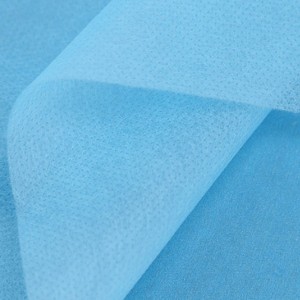
We know that there are several types of non-woven fabric manufacturing processes, not just one or two of them. Today, the manufacturer of non-woven fabric, Duomeiwoven Fabric, would like to discuss with you about the production process of antibacterial non-woven fabric.
In fact, the production process of antibacterial non-woven fabric is not much different from that of non-woven fabric. It only adds a kind of long-lasting antibacterial plastic masterbatch to the ordinary non-woven fabric production process. Then, the ordinary non-woven fabric becomes long-lasting antibacterial non-woven fabric.
The addition process is relatively simple and convenient. Without changing the original non-woven fabric production process, finding the appropriate addition point in the original non-woven fabric production process and directly applying it. The addition ratio of the Omekang long-lasting antibacterial plastic masterbatch is also calculated according to the requirements of the non-woven fabric. For example, it can be 1% to 5%, or other addition ratios are also acceptable. There is no specific standard mentioned for this.

The following is a detailed introduction to the production process of antibacterial non-woven fabrics:
1. Water-jet non-woven fabric: The water-jet process involves spraying a fine stream of water onto a single or multiple layers of a fiber web. This causes the fibers to entangle with each other, strengthening the fiber web and giving it a certain strength.
2. Heat-sealed non-woven fabric: Heat-sealed non-woven fabric refers to adding a fibrous or powdered heat-melting reinforcing engineering material to the fiber web. The fiber web is then heated to a molten temperature and cooled to form a fabric.
3. Wet-process non-woven fabric: The production method of wet-process non-woven fabric is not difficult to understand. It involves loosening the fiber raw materials in a water medium into single fibers, and then mixing different fiber raw materials. The resulting slurry is transported to a netting device, and then the fibers form a net-like structure in a wet state and are finally reinforced into a fabric.
4. Pulp-airflow non-woven fabric: Airflow non-woven fabric, also known as dry papermaking non-woven fabric or dust-free paper. It uses airflow to loosen the wood pulp fibers into a single fiber state, and then uses the airflow method to cause the fibers to condense on the forming screen. Then the fibers are formed into a net-like structure and finally reinforced into a fabric.
5. Melt-blown non-woven fabric: Polymer feeding - melt extrusion - fiber formation - fiber cooling - forming net - reinforcement into fabric.
6. Spunbond non-woven fabric: Spunbond non-woven fabric is a type of dry non-woven fabric. It uses the piercing effect to reinforce the fluffy fiber web into a fabric.
7. Needle-punched non-woven fabric: Needle-punched non-woven fabric is a type of dry non-woven fabric. It uses the piercing effect to reinforce the loose fiber web into a fabric.
8. Hydrophilic non-woven fabric: Hydrophilic non-woven fabric is mainly used to produce medical materials to achieve better feel and avoid skin abrasion.
9. Sewing-embroidered non-woven fabric: Sewing-embroidered non-woven fabric is a type of dry non-woven fabric. Sewing-embroidery is a method of reinforcing the fiber web, yarn layer, non-woven material (such as plastic sheets, plastic thin metal foils, etc.) or their combinations using an interlocking loop structure to form a non-woven fabric.
About the production process of antibacterial non-woven fabrics, that's all. I hope it is helpful to everyone. Jiangmen Duomei Non-woven Fabric Co., Ltd. is a professional non-woven fabric enterprise for medical and health materials. Its main products include: hydrophilic non-woven fabric, water-repellent and skin-friendly non-woven fabric, various pore-type hydrophilic perforated non-woven fabric, and various pressure-point non-woven fabric front waist pads. The company's products are widely used in healthcare, maternal and child hygiene products, adult diapers, etc. Welcome all sectors to purchase and consult.
Some of the content of this article is compiled from online sharing. If there is any infringement, please contact the editor to delete.


 Current location: